
Front-running is a fraudulent practice where traders exploit advance knowledge of large client orders for personal profit.

The draft digital personal data protection (DPDP) rules, which require banks to obtain explicit consent from their customers before using their data for purposes beyond the original intent, although is being followed in spirit, leaves no room for regulatory arbitrage, experts said. They said that the potential business impact is difficult to assess at this stage, but the formalisation of these rules will mean banks now need to establish clear data processing agreements with third-party entities to ensure compliance.

Gensol Engineering's promoters treated the listed company as a proprietary firm, diverting corporate funds to buy a high-end apartment in The Camellias, DLF Gurgaon, splurging on a luxury golf set, paying off credit cards, and transferring money to close relatives, Sebi revealed in its interim order.

An analysis by the Securities and Exchange Board of India (Sebi) has revealed that retail traders remain at the wrong end of the stick when it comes to equity derivatives trading. About 93 per cent of them incurred an average loss of Rs 2 lakh (per trader) during the last three financial years. The new report highlights an increase in the loss-making individual investors in futures and options (F&O) to 91.1 per cent in FY24 compared to 89 per cent in FY22.

The co-operative banking sector is well regulated, and a few cases of restrictions being imposed by the Reserve Bank of India (RBI) should not paint a negative picture of the entire sector, said Department of Economic Affairs (DEA) secretary Ajay Seth on Monday. "Co-operative banks in the country are generally quite robust, and the RBI takes regulatory action whenever issues arise.
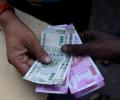
'As long as economic growth remains steady, creating jobs and generating stable incomes, the rise in home loans should not create problems.' 'If the growth trajectory changes course over the medium term and interest rates rise along with inflation, the expanding trend in home loans may not sustain.'

The turnover of FMCG major Nestle India's has grown 2.5 folds to Rs 20,100 crore in last one decade, post the Maggi crisis in 2015, according to the company's latest annual report. At the time of crisis, Nestle India's turnover was at Rs 8,100 crore.

The bank made a Rs 67 crore net profit, up 21% from the previous year. Its deposits grew 8%, the loan book 10%. Net bad loans dropped from 7.53% to 6.07%. So why was the banker, who headed the bank, not promoted?

In Q1FY26, the bank reported fresh slippages of 8,200 crore, up 71 per cent Y-o-Y and sequentially. Of this, 7,500 crore is from the retail segment.

Life Insurance Corporation of India's (LIC) annualised premium equivalent (APE) growth remained weak in the fourth quarter of the financial year 2024-25 (Q4FY25) and flat in FY25, but management expects growth to rebound in FY26. The focus remains on improving product mix by increasing share of non-participating or non-par products in the individual APE.

Fundraising by Indian companies through equity and debt reached an all-time high in the financial year 2024-25 (FY25), according to data collated by primedatabase.com. Fundraising through debt stood at Rs 11.1 trillion in FY25, including contributions from InvITs (infrastructure investment trusts) and REITs (real estate investment trusts).

The revised ceiling will be within the Rs 10 lakh mark.

Hero MotoCorp Ltd (HMCL) has been the best-performing auto stock over the last three months, gaining over 17 per cent during this period. Multiple tailwinds, especially on the rural front, are expected to boost its volumes. In addition to the demand drivers, new launches too should help drive growth both in the commuter and premium motorcycle categories.

New India Assurance and Niva Bupa have invested in the Bima Sugam India Federation.

Those who are responsible for the present mess are in charge of the clean-up.
In 2024, the Securities and Exchange Board of India (Sebi) implemented significant reforms, focusing on cooling down the derivatives segment, enhancing transparency and accountability in small and midsised enterprise (SME) listings, and deepening the fund management ecosystem.

The Reserve Bank of India's (RBI's) draft guidelines on gold loans, if implemented in their current form, are expected to impact non-banking financial companies (NBFCs) and mid-tier banks in the near term, more significantly than larger banks, according to analysts.

Registering the agreement for sale remains the most reliable way for a homebuyer to secure their legal and financial interests.

Towards the end of February, the Reserve Bank of India (RBI) restored the risk weighting on banks loans to non-banking financial companies (NBFCs; including to microfinance institutions, or MFIs) to 100 - back to its November 2023 position - from 125. It is only a partial relief though. "Higher risk weighting on unsecured lending continues to be in place while the same on bank funding to NBFCs has been done away with. "This is a positive step by RBI," says Rajiv Sabharwal, managing director (MD) and chief executive officer (CEO), Tata Capital.

'My job is to provide people with a bouquet of options they can choose from.'

The central bank has vehemently opposed the proposal, citing different reasons, including lack of focus and unconvincing results abroad.

Bad loans in the peer-to-peer (P2P) lending industry more than doubled in financial year 2024 (FY24) to Rs 1,163 crore from Rs 472.1 crore in FY23, said a financial services company on Monday. Non-performing assets (NPAs), as such loans are officially called, were a modest Rs 14.7 crore at the end of FY19 when P2P lending was in its nascent stage, according to Capitalmind Financial Services that accessed data from the Reserve Bank of India (RBI) through a right to information application.

India's four listed Real Estate Investment Trusts (Reits) collectively distributed 13 per cent more funds to their shareholders in fourth quarter of financial year 2024-25 (Q4FY25) at Rs 1,553 crore on year, reflecting the growing strength of the sector fuelled by strong leasing activity, especially from Global Capability Centres (GCCs).
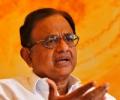
This was at a meeting of the Financial Stability and Development Council, chaired by him. Chidambaram, set to resign on Friday to make way for his successor, called upon the regulators and the ministry to be ready and take necessary action.

'$125 million for the hull and the remaining of over $350 million for liability.'
'It is imprudent on the part of Indian insurance companies to invest out of the shareholders' fund in a private limited company.'

For the first time, the Data Security Council of India assembled a joint task force to source threat intelligence at the origin and ensure coordinated action across the cybersecurity spectrum.

The Securities and Exchange Board of India (Sebi) on Thursday debarred Pacheli Industrial Finance and six others entities from the markets in its bid to crack down on a "pump and dump" case, substantiated by a probe into Rs 850 crore preferential allotment and examination of alerts around price movement of the firm's stock.

Metropolitan Stock Exchange of India (MSE) plans to raise Rs 120 crore from investors in an attempt to stay afloat. The beleaguered exchange's board has approved issuance of 1.19 billion equity shares of face value Rs 1 at a premium of Rs 1 through private placements, according to a disclosure on its website.

The Trump administration's decision follows Harvard University President Alan M Garber's statement that the school would not follow the administration's demands despite the possibility of the Ivy League school losing federal funding.

'The answer is not for me to give. The answer either way has to be heard from the industry itself. Tell us why not if you are not doing it; tell us if you are doing it -- why should this question remain unanswered?'

'Investors' decisions should reflect their financial goals, risk tolerance, and the amount of gold already present in their portfolio.'

In Debasish Panda's last board meeting as chairperson of the Insurance Regulatory and Development Authority of India (Irdai), the regulator approved the "R2" licence for Kamlesh Goyal and Prem Watsa-backed Value Attics Reinsurance, making it the first private-sector Indian reinsurer after GIC Re, the public-sector reinsurer. "The authority reviewed and approved the R2 application of Value Attics Reinsurance, making it the first private-sector reinsurer after GIC Re, the public-sector reinsurer.

Around Rs 1 trillion, or a fifth of the investments made by alternative investment funds (AIFs) are questionable in terms of the intent behind the investments and are under the scanner for circumvention of regulations, said Ananth Narayan, whole-time member of Securities and Exchange Board of India (Sebi). AIFs are pooled investment vehicles that invest in a variety of assets including real estate, startups, unlisted companies, and derivative strategies in the listed space.

'We need to be very vigilant as we are passing through some fraught times.'

National auditor says a significant part of NPAs was due to fraud and may never be recovered

The Fintech Association for Consumer Empowerment (FACE), the only self-regulatory organisation for financial technology/fintech (SRO-FT) companies, is aiming to secure membership from at least 75 per cent of players across all key fintech categories within the next three years, according to a senior executive. The total number of members in the organisation has increased to 110, up from around 60 when it received approval from the Reserve Bank of India (RBI) to operate as an SRO-FT in August.

Delhi-based electric vehicle (EV) ride-hailing firm Evera Cabs, which grabbed headlines after acquiring 500 cars from the now-defunct cab service BluSmart, is stepping up its presence in the EV cab segment. The company is aiming for revenue of Rs 100 crore in the ongoing financial year (2025-26), up from Rs 18 crore in 2024-25.

State Bank of India (SBI) - the country's largest lender - has unveiled two new schemes to boost deposit mobilisation at a time when most banks are facing challenges in raising resources. The first is 'Har Ghar Lakhpati,' a pre-calculated recurring deposit (RD) scheme designed to help customers accumulate Rs 100,000 or multiples thereof and develop a savings habit.

The government on Monday invited applications for the post of chairman of the Securities and Exchange Board of India (Sebi). The current SEBI chairperson Madhavi Puri Buch's three-year term ends on February 28. Buch assumed charge at the helm of Sebi on March 2, 2022.
